Google SEO in 2026: What Changed and What Still Works
65% of all Google searches now end without a single click to any website.
Let that sink in. Two out of every three people who search Google find their answer without visiting your page, my page, or anyone’s page. The answer is right there on the search results — in an AI Overview, a featured snippet, a knowledge panel, or a People Also Ask box.
If you’ve been doing SEO the same way you did in 2023 or 2024, you’re not just behind — you’re playing a game that’s been fundamentally redesigned while you were following the old rulebook.
I’ve been building and analyzing websites for over 10 years. I’ve lived through Panda, Penguin, Hummingbird, BERT, the Helpful Content updates, and now this — the AI era of search. And I’ll tell you straight: 2026 is the most significant shift in how Google works since they introduced PageRank. The core mechanics of search have changed. What Google rewards has changed. How users interact with results has changed.
But — and this is the part most doom-and-gloom articles miss — SEO is not dead. It’s different. The sites winning in 2026 are winning bigger than ever because the competition is confused, overwhelmed, and making mistakes. If you understand what actually changed and adapt accordingly, you’re in a stronger position than you’ve ever been.
This guide breaks it down: what died, what survived, what’s new, and exactly how to do SEO in 2026 based on what Google has confirmed and what the data actually shows.
What Happened in 2026 (The Timeline)
2026 has been the most turbulent year for SEO in recent memory. Google shipped three confirmed algorithm updates in just five weeks:
February 5, 2026 — Discover Core Update. Google’s first-ever Discover-specific core update. Rolled out over 22 days. Designed to reduce clickbait and sensational content while boosting original, in-depth, locally relevant content from sites with genuine expertise. This update specifically targeted the Google Discover feed — the content recommendations that appear on your Android home screen and in the Google app.
March 24-25, 2026 — March Spam Update. Completed in under 20 hours. Expanded enforcement against three categories: scaled AI content abuse, expired domain manipulation, and site reputation abuse (parasite SEO). Fast, surgical, and targeted.
March 27 – April 8, 2026 — March Core Update. The first broad core update of 2026. Took 12 days to complete. Google described it as “a regular update designed to better surface relevant, satisfying content for searchers from all types of sites.” Industry analysis from SISTRIX revealed that YouTube lost 567 visibility points — the single largest drop for any domain in recent tracking history. Over 55% of monitored sites saw measurable impact within two weeks.
Three updates in five weeks means that if you saw ranking changes between February and mid-April, untangling which update caused what is genuinely difficult. Rankings that dropped on March 25 could be from the spam update or the early phase of the core update — or both.
The Biggest Change: AI Overviews Ate the Click
If there’s one thing you take from this entire article, make it this: AI Overviews have fundamentally restructured how Google search works, and the impact on organic traffic is massive and permanent.
Here are the numbers:
AI Overviews now appear on roughly 48-50% of all US search queries. That’s up from barely existing two years ago. When an AI Overview appears, it sits above all organic results, pushing everything else down the page.
When AI Overviews are present, the zero-click rate jumps to 83%. Eight out of ten users get their answer from the AI summary and never click through to any website. For comparison, traditional search results without AI Overviews have a zero-click rate of about 60% — already high, but 83% is a different universe.
Organic CTR for position 1 drops by up to 58% when an AI Overview appears. If you ranked #1 for a keyword and were getting a 15% click-through rate, an AI Overview can cut that to 6-8%. For some queries, the drop is as severe as 79%.
But here’s the critical nuance: AI Overviews overwhelmingly trigger on informational queries — “what is,” “how does,” “explain,” “definition of.” They barely touch transactional and commercial queries. E-commerce queries only trigger AI Overviews 4% of the time. Local searches trigger them only 7% of the time.
What this means for you: If your SEO strategy is built around ranking for informational keywords and hoping for clicks, you’re in serious trouble. If your strategy is built around commercial, comparison, and transactional keywords — the kind where people still need to click through to take action — you’re in a much stronger position.
For a review site like DigitalProdReview, this is actually good news. Nobody gets their answer about “is BrainBeast AI worth buying” from an AI Overview. They need to click through and read the full review. That’s commercial intent, and commercial intent still gets clicks.
What Died in SEO (Stop Doing This)
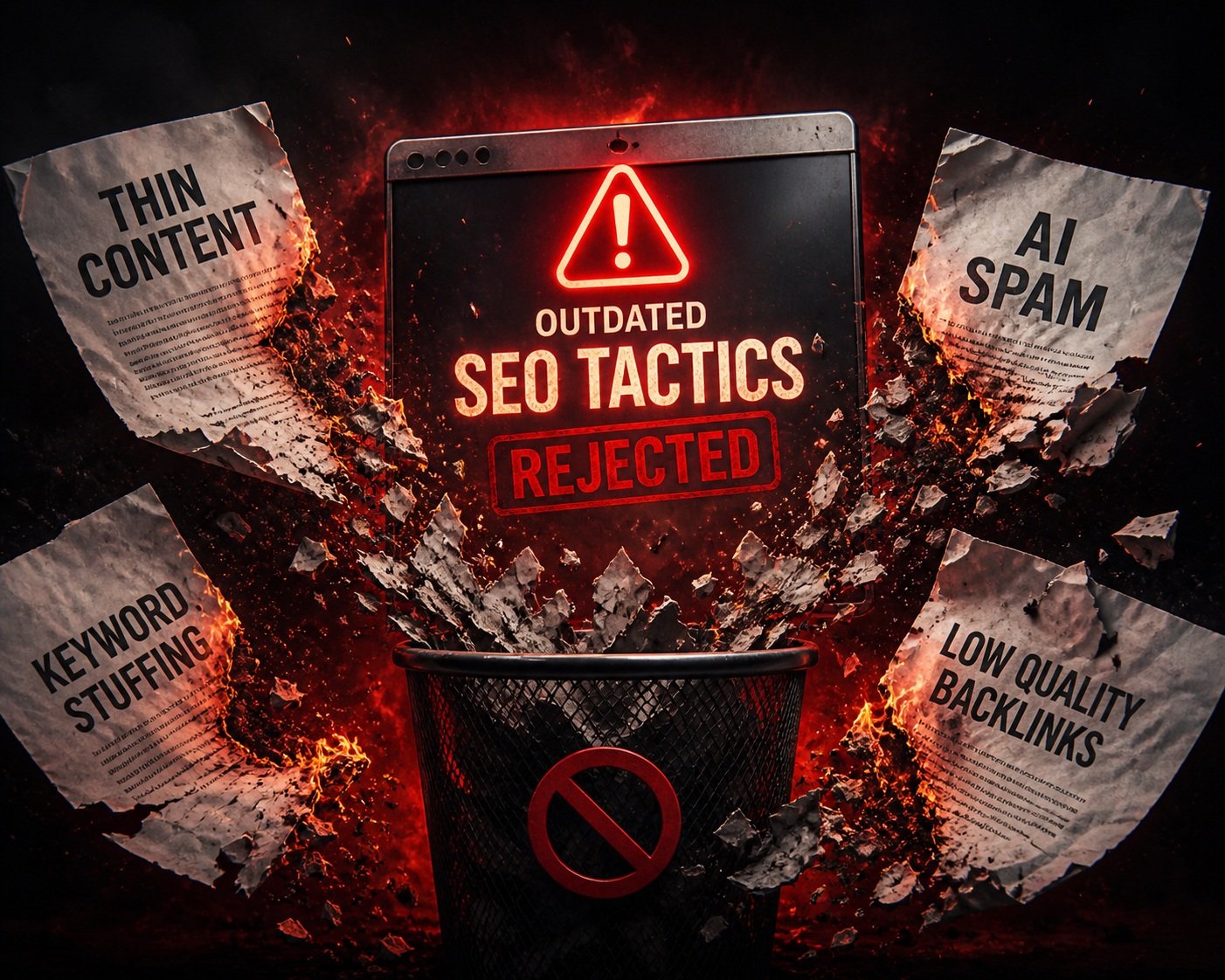
1. Thin Informational Content
The days of writing 500-word “What Is [Topic]” articles and ranking for them are over. AI Overviews answer these queries directly on the search results page. Google doesn’t need your website to explain what a sales funnel is — it can synthesize that answer from a dozen sources and display it instantly.
If your site is built on hundreds of thin informational posts with no unique angle, original data, or genuine expertise, you’re watching your traffic evaporate in real time. HubSpot reportedly saw a 70-80% decline in organic traffic from exactly this content type.
2. AI-Generated Content at Scale
The March 2026 spam update specifically targeted “scaled AI content abuse.” Google can detect patterns in AI-generated content — the hedging language, the generic structure, the lack of specific examples and data. Sites that used AI to mass-produce hundreds of articles with minimal human editing were hit hardest.
This doesn’t mean you can’t use AI in your content process. It means you can’t publish raw AI output and expect it to rank. The sites that survived and thrived used AI as a drafting tool while adding human expertise, original analysis, and specific examples on top.
3. Parasite SEO
Parasite SEO — publishing affiliate or commercial content on high-authority domains you don’t own (Forbes Marketplace, major news site subdomains) — was directly targeted by the spam update. Google has made it clear that using someone else’s domain authority to rank commercial content is a manipulation tactic, and they’re enforcing against it.
4. Link Building Schemes
Private blog networks, link exchanges, sponsored post link schemes, and other manipulative link building tactics have been progressively devalued. Google’s systems are increasingly sophisticated at identifying unnatural link patterns. In 2026, a link from a relevant, genuine source is worth more than 100 links from link farms.
5. Keyword Stuffing (Including the Subtle Kind)
Even the “sophisticated” version of keyword stuffing — using exact-match keywords in every H2, cramming them into image ALT text, forcing them into the first sentence — is counterproductive. Google’s semantic understanding is advanced enough that it doesn’t need exact keyword matches to understand what your content is about. Write naturally. Mention your topic clearly. Don’t force it.
What Still Works (Double Down on This)
1. Commercial and Buyer-Intent Content
Product reviews, comparison posts, “best of” roundups, “X vs Y” articles — these content types still earn clicks because AI Overviews can’t replace the human judgment and analysis they provide. A person searching for “best AI writing tool 2026” needs to read multiple perspectives before making a decision. An AI summary doesn’t replace that process.
This is the sweet spot for affiliate sites, review sites, and any business targeting buyers who are actively evaluating options.
2. Original Research and Proprietary Data
If you have data nobody else has — surveys you conducted, experiments you ran, products you tested, results you measured — that content is essentially AI-proof. AI Overviews synthesize existing information. They can’t create new information. Original research earns links, citations, featured snippets, and increasingly, mentions in AI Overviews themselves.
Brands cited in AI Overviews earn 35% more organic clicks and 91% more paid clicks than those not cited. Being the source that AI references is the new competitive objective.
3. E-E-A-T (Stronger Than Ever)
Experience, Expertise, Authoritativeness, and Trustworthiness aren’t just nice-to-haves in 2026 — they’re the primary filter Google uses to determine which content deserves to rank. The March 2026 core update explicitly rewarded sites demonstrating real expertise and penalized sites with “weak differentiation.”
What this looks like in practice:
Experience: Share first-hand stories, specific examples from your own work, screenshots of real results, lessons learned from doing the thing — not just describing it.
Expertise: Demonstrate deep knowledge. Reference specific data points, cite current research, show understanding of nuances that generalists miss. An article about SEO written by someone who has actually built and ranked websites reads completely differently from one written by someone summarizing other articles.
Authoritativeness: Build a recognizable author identity. Your About page, your author bio, your LinkedIn profile, your social media presence — Google’s systems cross-reference these to evaluate whether you’re a real person with genuine authority in your topic.
Trustworthiness: Be transparent about your methodology, your biases, your affiliate relationships. Accuracy matters — factual errors undermine trust signals. Update content when information changes. Show your sources.
4. Topic Clusters and Content Depth
Google’s March 2026 core update rewarded “experience-driven content” and penalized “summary-style content.” The pattern is clear: Google wants depth over breadth.
Instead of publishing 100 articles touching 100 topics at surface level, publish 20 articles covering 5 topics in genuine depth. Create topic clusters — a pillar page supported by 10-15 detailed supporting articles, all interlinked. This architecture signals to Google that your site has comprehensive expertise on a subject.
Cyrus Shepard’s analysis of 400+ sites after the March 2026 update found that organic traffic winners were more likely to have “tight topical focus” and “proprietary assets.” Sites that went deep won. Sites that went wide lost.
5. Technical SEO Fundamentals
Core Web Vitals, mobile optimization, clean site architecture, proper indexation, fast load times — these haven’t changed. In fact, the March 2026 core update introduced holistic Core Web Vitals scoring, meaning Google now evaluates LCP, INP, and CLS as a composite performance score rather than individually. Sites passing all three thresholds see stronger ranking boosts, while those failing even one metric face compounded penalties.
Technical SEO isn’t glamorous, but it’s the foundation that everything else sits on. No amount of great content compensates for a site that takes 8 seconds to load on mobile.
What’s New (The 2026 Additions)
AI as a Content Competitor (Not Just a Tool)
Google’s AI Overviews are now your direct competitor for informational queries. But they’re also a potential traffic source. Sites cited in AI Overviews receive significantly more clicks than sites that aren’t cited. The new SEO game includes optimizing to be the source that AI references.
How to optimize for AI citation: use clear, factual statements with specific data. Structure content with tables, comparison charts, and well-organized lists. Provide the definitive answer in a concise 40-60 word block that AI can extract. Be the most authoritative source on your topic.
Discover Optimization Is Now Official
Google’s February 2026 Discover core update made it clear that Discover is a distinct search surface with its own ranking systems. Sites that publish timely, original, in-depth content can drive significant traffic from Discover — traffic that doesn’t depend on traditional search rankings at all.
Discover optimization priorities: use high-quality images (1200px+ wide), write compelling headlines that inform rather than bait, publish content with genuine expertise, and avoid clickbait or sensational framing.
Aggregator Sites Are Losing Ground
One of the strongest signals from the March 2026 core update: comparison sites, OTAs, job boards, review aggregators, and “what to watch” tools all lost visibility. Google is moving traffic past the layer of sites that merely index or comment on third-party content. Sites that own proprietary data, let users complete tasks, and offer genuine product or service value are gaining.
For review sites, this means that generic “top 10” listicles that just summarize other reviews are losing to sites with original evaluation methodology, genuine testing or research, and unique scoring systems.
The Rise of Answer Engine Optimization (AEO)
Beyond Google, people now search through ChatGPT, Perplexity, Claude, and other AI platforms. Traffic from AI platforms increased 527% year-over-year. YouTube and Reddit combined account for 78.2% of AI social media citations.
This means SEO in 2026 isn’t just about Google anymore. Optimizing your content to be cited by AI systems — through structured data, clear factual statements, and authoritative sourcing — is becoming a parallel discipline alongside traditional SEO.
The 2026 SEO Checklist (What to Do This Month)
If you could only do 10 things for your SEO this month, do these:
1. Audit your content by intent type. Separate your pages into informational, commercial, transactional, and navigational. Evaluate which informational pages are losing traffic to AI Overviews. Redirect your content investment toward commercial and transactional content where clicks still happen.
2. Check Google Search Console for striking-distance keywords. Find pages ranking positions 5-15. These are your highest-ROI optimization targets. Add relevant H2 subheadings, expand thin sections, update data, and strengthen internal links to these pages.
3. Update every article with a “Last Updated” date. Google’s systems use freshness signals heavily. A page updated in April 2026 outranks an identical page last touched in 2024. But only update the date when you make substantive content changes — not cosmetic edits.
4. Complete your E-E-A-T infrastructure. About page with real author name and photo. Review methodology page (for review sites). Author boxes on every article. LinkedIn profile that corroborates your expertise. These are table stakes, not optional.
5. Run a Core Web Vitals audit. Google now scores LCP, INP, and CLS as a composite. Check PageSpeed Insights for every key page. Fix anything in the “Poor” or “Needs Improvement” zone. Prioritize mobile performance — over 60% of searches happen on mobile.
6. Build topic clusters, not isolated posts. Pick your 3-5 most important topics. Ensure each has a comprehensive pillar page linked to 8-15 supporting articles. Fill gaps where supporting content is missing.
7. Add structured data (schema markup). Review schema for review pages. Article schema for guides. FAQ schema for pages with question sections. BreadcrumbList schema sitewide. These help both Google and AI systems understand your content structure.
8. Respond to every Google review (for local businesses). 89% of consumers prefer businesses that respond to all reviews. Review responses are free content, trust signals, and ranking factors wrapped in one.
9. Create one piece of original research per quarter. A survey, an analysis, a case study, a data compilation — anything that provides information nobody else has. This earns links naturally and positions you as a source AI systems cite.
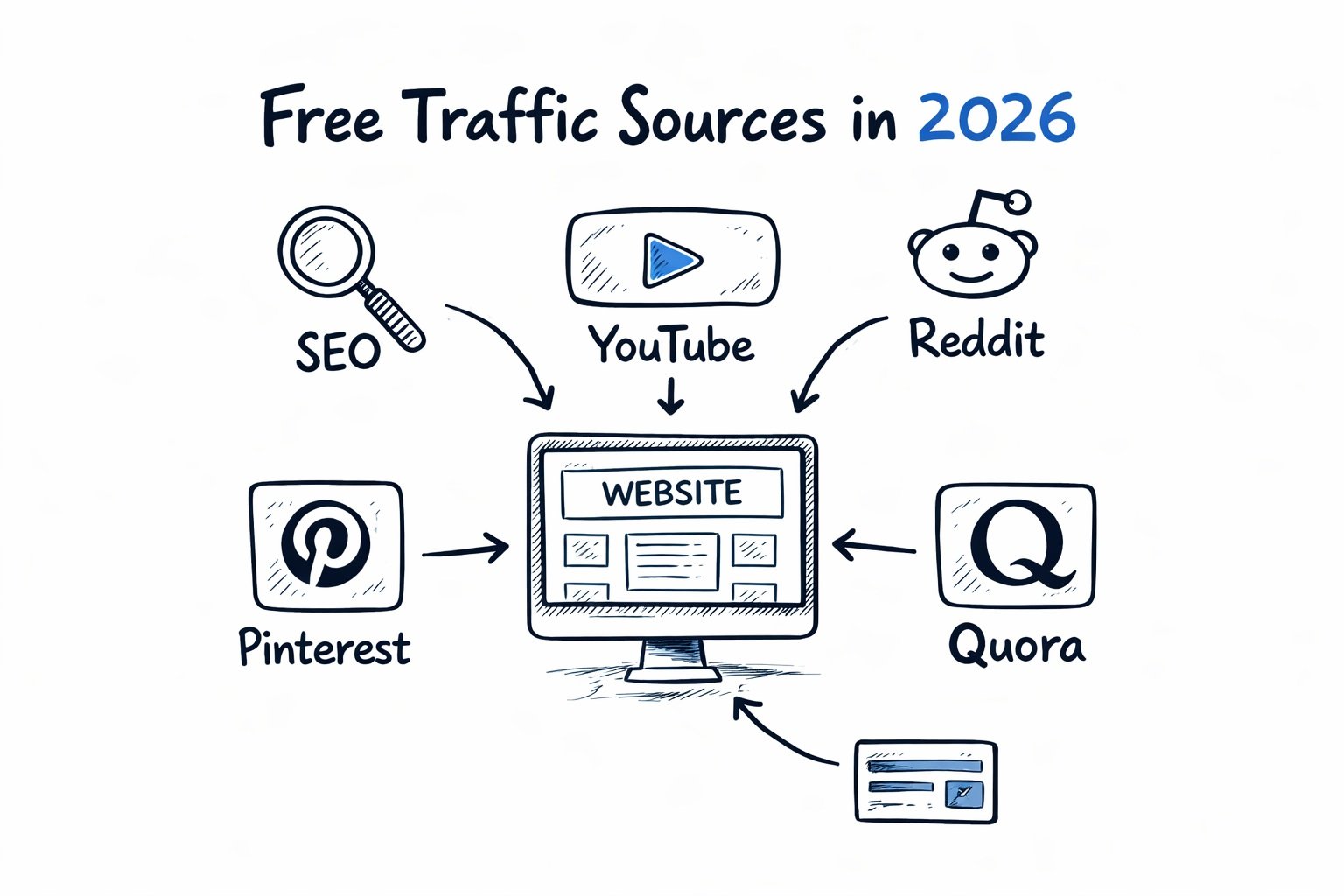
10. Diversify beyond Google. Build your email list. Post on YouTube. Participate in Reddit communities. Publish on LinkedIn. Google should be your largest traffic source, not your only traffic source. The sites that survived every algorithm update in history are the ones that didn’t depend entirely on one channel.
FAQ: Google SEO in 2026
Is SEO dead in 2026?
No. Organic search still drives 53% of all trackable website traffic — more than any other channel. What’s dead is the specific version of SEO that relied on publishing thin informational content, stuffing keywords, and chasing backlinks from low-quality sources. The version of SEO that’s thriving in 2026 focuses on commercial intent content, genuine expertise, original research, and technical excellence. The opportunity is as large as ever — the tactics have changed.
Do AI Overviews kill all organic traffic?
No. AI Overviews predominantly affect informational queries (“what is,” “how to,” “explain”). Commercial, transactional, comparison, and local queries are significantly less affected. E-commerce queries trigger AI Overviews only 4% of the time. Local queries only 7%. Product review and comparison keywords — the type that affiliate and review sites target — retain strong click-through rates because users need to read full analysis before making purchase decisions.
What was the March 2026 core update about?
Google described it as “a regular update designed to better surface relevant, satisfying content for searchers from all types of sites.” Analysis from SISTRIX, Coalition Technologies, and other firms shows it rewarded sites with strong content quality, technical SEO, original expertise, and tight topical focus. Sites with weak differentiation, generic content, or misaligned user intent saw declines. YouTube experienced the largest visibility drop of any domain in recent tracking history.
How important is E-E-A-T for SEO in 2026?
Critical. A GoodFirms 2026 survey found 65% of marketers cite AI-driven search changes as their biggest challenge, and E-E-A-T is increasingly the filter Google uses to determine which content gets cited in AI Overviews and which gets ignored. In a world where AI can generate infinite generic content, demonstrated Experience, Expertise, Authoritativeness, and Trustworthiness are the signals that separate content worth ranking from content worth ignoring.
Should I still build backlinks in 2026?
Yes, but the approach has changed. Manipulative link building (PBNs, link exchanges, paid links) is increasingly detected and penalized. Organic link building — earning links through original research, genuinely useful resources, and content worth referencing — remains a strong ranking signal. Focus on creating content that people link to because it adds value, not on buying or trading links.
How do I optimize for AI Overviews and ChatGPT citations?
Structure your content clearly with factual statements, specific data points, comparison tables, and concise 40-60 word answer blocks. Use schema markup. Be the most authoritative and comprehensive source on your specific topic. Sites cited in AI Overviews earn 35% more organic clicks — making AI citation the new competitive advantage. YouTube and Reddit account for 78.2% of AI social media citations, so presence on those platforms amplifies your chances.
The Bottom Line
Google SEO in 2026 is harder and easier at the same time.
Harder because the rules changed. AI Overviews are stealing informational clicks. Google dropped three algorithm updates in five weeks. The bar for content quality has never been higher. Generic, AI-generated, surface-level content is being actively suppressed.
Easier because most of your competition is still doing it the old way. They’re publishing thin content, ignoring E-E-A-T, neglecting technical SEO, and panicking about AI instead of adapting to it. The sites that understand the new landscape — that focus on commercial intent, original expertise, content depth, and multi-platform visibility — face less competition than ever for the traffic that actually converts.
The game didn’t end. The rules changed. Learn the new rules and you win bigger than before.